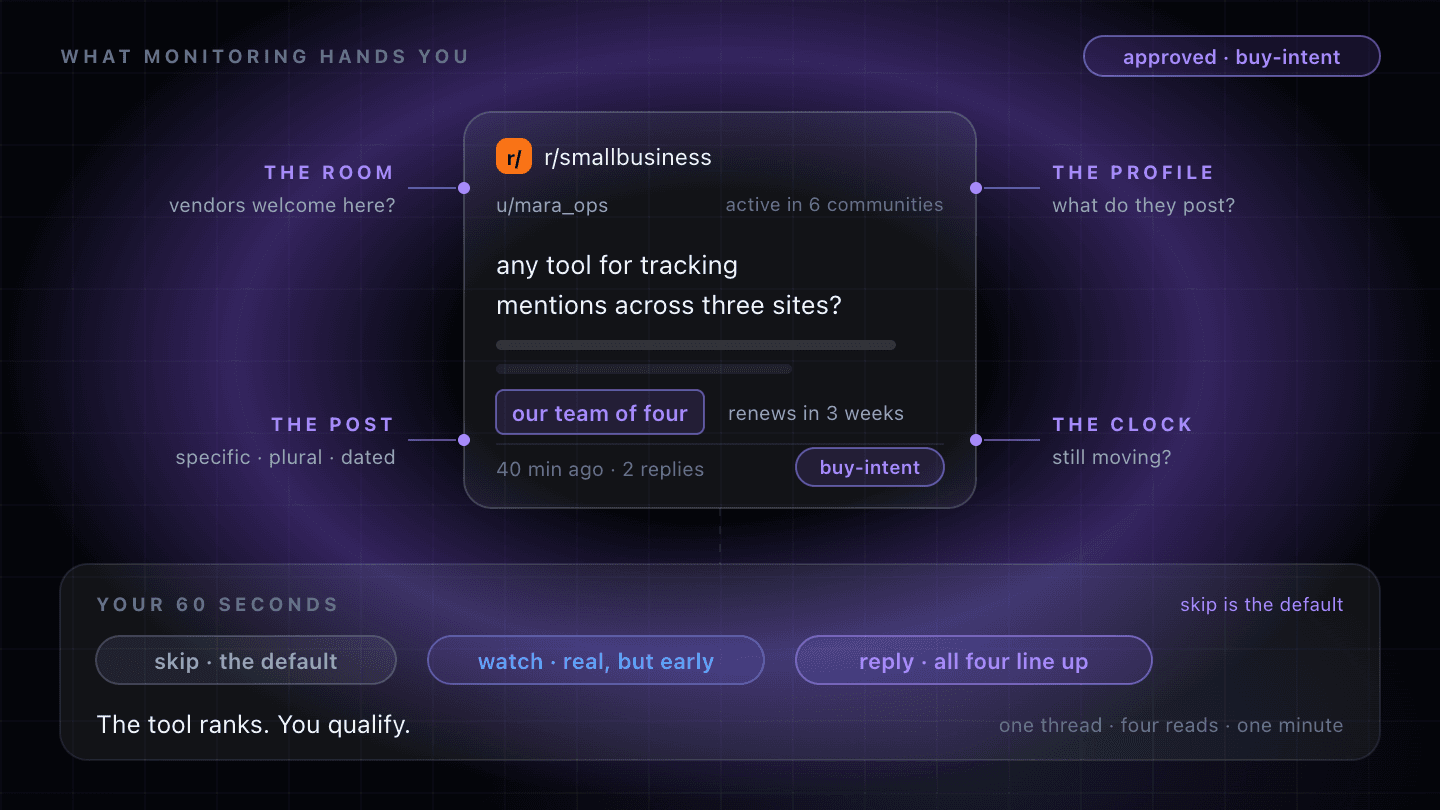
Why does a surfaced thread still need qualifying?
Because everything that got the thread in front of you is a text test. A keyword matches a run of characters; an AI pass reads the words in the post and scores them. Neither has opened the poster's profile, neither knows the room the thread is sitting in, and neither knows whether you can actually help this particular person. The queue arrives ranked. It does not arrive decided.
The machine reads the text; you read the situation
Four things decide whether a thread is worth answering and only the first is in the post's text. Whether the person has a real problem is in the text. Whether they can act on an answer is in their history. Whether a vendor is welcome is in the community's culture. Whether anybody will read your comment is in the thread's age and reply count. A relevance score sees one of the four.
So the honest division of labour is that the tool decides what you look at and you decide what you answer. That gap is small work — under a minute per thread once you know what you are looking at — and the expensive mistake is skipping it, because the reply you post is the only part of this that strangers ever see.
What a wrong reply actually costs
Not much money and quite a lot of credibility, which is the scarcer of the two. SurveyMonkey's study with Reddit, among 1,202 US business decision-makers, found 73% name peer insights their most trusted source — ahead of vendor websites at 55% and review sites at 46%. That trust is why a good answer in a thread works at all, and it is exactly what a vendor spends answering a question nobody asked it.
A good reply earns you one thread. A bad one — a pitch under a support question, a product name dropped into somebody's off-topic rant — is public, permanent, attached to your brand, and read by everyone who finds that thread from a search months later.